Vedic Astrology Blog
Expert guidance on Vedic astrology, horoscopes, kundli matching & spiritual wisdom.
What Is Vedic Astrology?
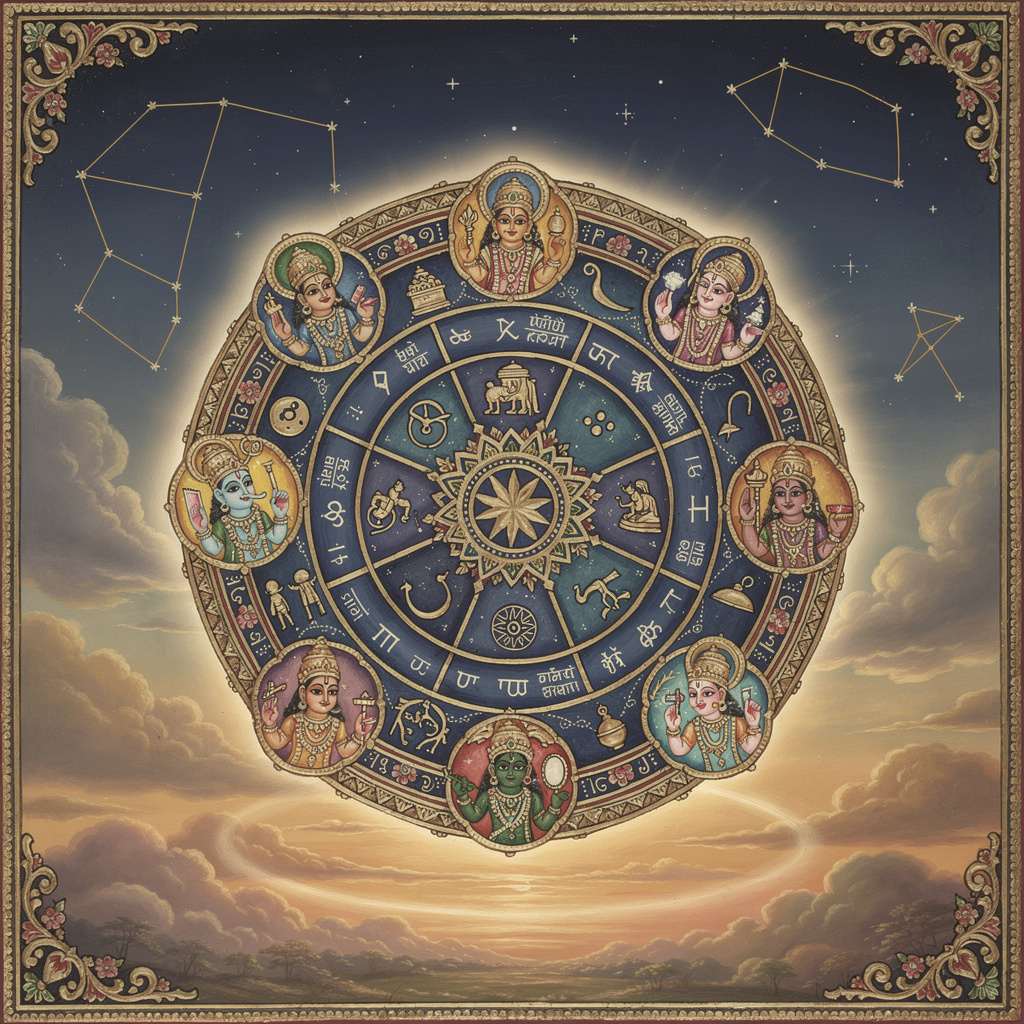
What Is Vedic Astrology? A Complete Beginner's Guide to JyotishSomewhere between science, philosophy and self-reflection sits a tradition that has guided Indian life for generations â Vedic astrology, known in Sanskrit as Jyotish, literally "the science of light." Whether you have heard the term from a family elder, encountered it while searching for life guidance, or simply come across the phrase "Vedic astrology" online and wondered what it actually means, this guide will walk you through it in plain, modern language.At AADIKARTA, we believe astrology should be understood before it is practiced or judged. This article explains what Vedic astrology is, where it comes from, how it works, how it differs from the astrology most people see in Western newspapers and apps, and how to approach it in a grounded, practical way â without hype, fear, or guaranteed predictions.What Does "Vedic Astrology" Actually Mean?Vedic astrology refers to a system of astrology that originated in the Indian subcontinent and is deeply connected to the Vedic tradition â the body of ancient Indian knowledge that also gave rise to yoga, Ayurveda and Sanskrit philosophy. In Sanskrit, this system is called Jyotish Shastra, often translated as "the science/study of light" or "the science of celestial bodies."The core idea behind Jyotish is simple to state, even though its practice is layered and detailed: the positions of the Sun, Moon and planets at the moment of a person's birth are recorded as a kind of cosmic snapshot, and this snapshot â called a birth chart or Kundli â is studied as a symbolic map of that person's life patterns, tendencies and potential timing of events.It is important to understand Jyotish as a descriptive and reflective tool, not a system of fixed, unavoidable fate. Traditional Vedic thought consistently emphasizes free will (purushartha) alongside destiny (prarabdha karma) â the chart shows tendencies and potential, not an unchangeable script.The Origins of Vedic AstrologyJyotish is traditionally counted among the Vedangas â the six auxiliary fields of study connected to the Vedas â where it played a practical role in determining the correct timing for rituals and ceremonies. Over centuries, this timekeeping function expanded into a broader system for understanding human life, personality and life events through the movement of celestial bodies.Unlike some spiritual traditions where origins are shrouded in myth alone, Jyotish developed as a structured discipline with its own mathematics (astronomy), symbolism, and interpretive framework, refined and transmitted across generations. It is worth noting honestly: precise dates, authorship and the evolution of specific techniques are debated among scholars, and AADIKARTA does not claim exact historical certainty where none exists in the wider record. What can be said with confidence is that Jyotish is an old, continuous and living tradition, still actively practiced and studied today.The Core Building Blocks of Vedic AstrologyTo understand how Jyotish works, it helps to know its basic vocabulary. Here are the essential concepts, explained simply.1. Graha (Planets)In Vedic astrology, nine celestial bodies â called Navagraha â are considered significant: the Sun (Surya), Moon (Chandra), Mars (Mangal), Mercury (Budh), Jupiter (Guru), Venus (Shukra), Saturn (Shani), and two mathematical points called Rahu and Ketu (the lunar nodes, representing the points where the Moon's orbit crosses the Sun's apparent path). Each Graha is associated with particular themes â for example, the Moon is linked to the mind and emotions, while Jupiter is linked to wisdom, growth and expansion.2. Rashi (Zodiac Signs)Just like Western astrology, Jyotish divides the sky into twelve Rashis, or zodiac signs â Mesha (Aries), Vrishabha (Taurus), and so on. However, as explained below, Vedic astrology calculates these signs differently than Western astrology does.3. Bhava (Houses)The birth chart is divided into twelve Bhavas, or houses, each representing a life area â such as self and personality (1st house), wealth and family (2nd house), communication (3rd house), home and mother (4th house), and so forth, through to career, relationships, health and spirituality.4. Nakshatra (Lunar Mansions)A distinctive feature of Vedic astrology is its use of 27 Nakshatras, or lunar constellations, each spanning a smaller segment of the zodiac. The Nakshatra in which the Moon sits at birth is considered especially significant for personality and timing, adding a layer of detail not found in most Western astrology systems.5. Kundli (Birth Chart)All of the above â planetary positions, signs, houses and Nakshatras â are compiled into a chart called a Kundli or Janam Kundli, calculated using the exact date, time and place of birth. This chart is the primary tool a Jyotish practitioner works with.6. Dasha (Planetary Periods)Vedic astrology also includes a distinctive timing system called Dasha, most commonly the Vimshottari Dasha, which divides a person's life into planetary periods ruled sequentially by different Grahas. This is one of the ways Jyotish attempts to indicate when certain life themes may become more prominent, rather than only what those themes might be.Vedic Astrology vs. Western Astrology: What's the Real Difference?Many people are surprised to learn that Vedic and Western astrology, despite sharing some vocabulary (planets, houses, zodiac signs), are calculated quite differently. Here is a simple comparison.AspectVedic Astrology (Jyotish)Western AstrologyZodiac usedSidereal (based on fixed star positions)Tropical (based on the Earth's seasons)Ayanamsa adjustmentYes â accounts for the slow shift of the equinoxesNoEmphasisMoon sign (Rashi) and Nakshatra often given primary weightSun sign is often given primary weightTiming toolsDasha systems for event timingTransits and progressionsCultural rootsIndian/Vedic traditionGreco-Roman traditionThe most technical â and most important â difference is the sidereal vs. tropical zodiac. Because of a slow astronomical shift called the precession of the equinoxes, the tropical zodiac used in Western astrology and the sidereal zodiac used in Vedic astrology have drifted apart over time by roughly 24 degrees. This is why a person's "sign" can genuinely differ between the two systems â it isn't a contradiction or an error, simply two different reference frameworks.Myth vs. Reality in Vedic AstrologyVedic astrology is often misunderstood, partly due to sensationalized portrayals. Here are a few common myths, addressed honestly.Myth: "Vedic astrology can predict the exact date of any event with certainty."Reality: Reputable Jyotish practice deals in tendencies, probable periods and thematic guidance â not guaranteed, fixed outcomes. Life includes free will, effort and circumstance alongside any chart-based indication.Myth: "A difficult planetary placement means a person is doomed to suffering."Reality: Traditional Jyotish philosophy treats challenging placements as areas requiring awareness, effort or remedial practice â not as an unchangeable curse. Fear-based interpretations are a distortion of the tradition, not its foundation.Myth: "Vedic astrology is the same as Western astrology, just with Indian names."Reality: As shown above, the underlying zodiac calculation, emphasis and timing tools are genuinely different systems.Myth: "You need to believe in astrology for a birth chart reading to have any value."Reality: Many people engage with Jyotish the way they might engage with journaling, self-reflection tools, or personality frameworks â as a lens for thinking about patterns, timing and choices, not as a replacement for personal judgment.A Practical ExampleConsider two people born on the same date but a few hours apart. Because Jyotish relies on the exact time and place of birth (not just the date), their Ascendant (Lagna) â the sign rising on the eastern horizon at the moment of birth â may fall in entirely different signs. This single difference reshapes how the entire chart is read, since every house is measured relative to the Ascendant. This is one reason Vedic astrologers place strong emphasis on obtaining an accurate birth time before offering any interpretation â approximate times can meaningfully change the analysis.Practical Guidance: How to Approach Vedic Astrology ThoughtfullyIf you are exploring Jyotish for the first time, a few grounded practices can help:Get an accurate birth time. Check your birth certificate or hospital record where possible; even small errors can shift key chart calculations.Treat the chart as a mirror, not a verdict. Use it to reflect on tendencies and timing, while keeping your own judgment and agency central.Be cautious of fear-based readings. Any interpretation built around urgent fear, expensive "remedies," or guaranteed predictions is a red flag, not authentic tradition.Learn the basics yourself. Understanding your Rashi, Nakshatra and Ascendant gives you a foundation to engage critically with any reading you receive.Pair it with practical action. Traditional Jyotish was never meant to replace effort, planning or professional advice â in health, finance, career or relationships.ConclusionVedic astrology, or Jyotish, is far more than a mystical curiosity â it is a structured, symbolic system rooted in Indian tradition, built around real astronomical calculations and centuries of interpretive knowledge. At its best, it offers a language for self-reflection: understanding tendencies, recognizing cycles, and thinking about timing with a bit more awareness. It is not a tool for guaranteed predictions or fear, and it works best when approached with curiosity, honesty and personal responsibility. Whether you are drawn to it out of cultural connection, personal curiosity, or a search for perspective, understanding what Vedic astrology actually is â separate from myth and sensationalism â is the right first step.
Read Article
Manglik Dosha Remedies: Traditional Jyotish Guidance for a Balanced Marriage
Manglik Dosha Remedies: What Vedic Astrology Actually RecommendsIf your Manglik Checker has indicated Manglik Dosha in your birth chart, the first reaction may be concernâespecially if you are thinking about marriage.But Manglik Dosha should not be treated as a simple label of "good" or "bad."In Vedic astrology, Mars (Mangal) represents qualities such as courage, initiative, physical energy, competitiveness and assertiveness. Depending on its placement, strength and relationship with other factors in a horoscope, Mars can influence how a person handles conflict, independence, passion and partnership.That is why Manglik Dosha remedies should begin with understanding the horoscope rather than immediately performing a ritual.A proper assessment considers the complete birth chart, the relevant houses, Mars's condition, the seventh house of marriage, the seventh lord, Venus, Jupiter and the horoscope of the prospective partner. In some traditional approaches, additional factors can reduce or modify the significance attributed to Manglik Dosha.This article explains the traditional approach to remedies while keeping the discussion practical and free from fear-based predictions.What Is Manglik Dosha?Manglik Dosha, also called Mangal Dosha or Kuja Dosha, is a concept in Jyotish associated primarily with the placement of Mars in certain houses of the horoscope.Traditionally, Mars is considered for its placement in relation to the Lagna (Ascendant) and, depending on the tradition being followed, also from the Moon and Venus.A commonly used traditional assessment considers Mars in houses such as the:1st house4th house7th house8th house12th houseHowever, simply finding Mars in one of these houses does not mean that a person's marriage is destined to fail.The interpretation depends on the complete horoscope.Why Mars MattersMars is associated with:EnergyCourageAssertivenessCompetitionActionPhysical vitalityAnger and confrontation when poorly expressedMarriage, meanwhile, requires cooperation, patience and emotional regulation.Therefore, the traditional concern surrounding Manglik Dosha is not simply "Mars is bad." Rather, it relates to whether strong Martian tendencies may create challenges in partnership under particular horoscope conditions.Why Remedies Are ConsideredIn Jyotish, remedies are traditionally called Upayas.The purpose of an Upaya is not necessarily to "erase" a planetary placement. A birth chart is not something that can simply be rewritten.Instead, traditional remedies are understood as ways of:Cultivating constructive planetary qualitiesReducing excessive tendenciesEncouraging discipline and awarenessSupporting spiritual practiceDeveloping healthier responses to life's challengesFor Mars-related concerns, this means learning to express strength without unnecessary aggression.For example, a person with a strong competitive nature may channel that energy into exercise, leadership or productive work rather than allowing it to become constant conflict within a relationship.This is where traditional Jyotish can be connected meaningfully with modern life.Is Manglik Dosha Always Dangerous for Marriage?No.This is one of the most important points to understand.Manglik Dosha should not be interpreted as an automatic prediction of divorce, widowhood, conflict or an unhappy marriage.A horoscope is assessed as a whole.1. The Condition of MarsMars's sign, house, strength and associations can influence its expression.2. The Seventh HouseThe seventh house is traditionally associated with marriage and partnerships.3. The Seventh LordThe condition and placement of the seventh-house lord provide additional information about partnership themes.4. VenusVenus has an important role in relationship and marital analysis, particularly in traditional Jyotish.5. JupiterJupiter can provide important context in horoscope interpretation, including aspects and other relationships with relevant houses and planets.6. The Partner's HoroscopeTraditional Kundli matching does not necessarily treat each chart independently. The interaction between two horoscopes can be important.7. Other Mitigating or Cancellation FactorsDifferent schools of Jyotish describe circumstances under which the effect of Manglik Dosha may be reduced or modified.Therefore, a Manglik Checker is a starting pointânot the complete marriage analysis.Traditional Manglik Dosha RemediesThere are several traditional approaches associated with Mangal Dosha. They should be approached as spiritual or cultural practices rather than guaranteed mechanisms for changing an outcome.1. Hanuman WorshipDevotion to Lord Hanuman is traditionally associated with courage, discipline, devotion and controlled strength.For people who follow this tradition, practices may include:Reading Hanuman ChalisaVisiting a Hanuman templeMaintaining a regular devotional practiceObserving personal disciplineThe deeper principle is particularly relevant to Mars: strength should be guided by self-control.2. Tuesday Spiritual PracticeTuesday (Mangalvar) is traditionally associated with Mars.Some practitioners choose Tuesday for:PrayerMeditationTemple visitsActs of charityPersonal disciplineThe value of such a practice can also come from consistency and mindfulness rather than simply performing a ritual mechanically.3. Charity and ServiceTraditional remedial practices may include charitable acts connected symbolically with Mars.Rather than treating charity as a transaction with a planet, it can be approached as an opportunity to cultivate generosity, humility and responsibility.The most meaningful remedy is often one that becomes a sustainable part of a person's life.4. Physical DisciplineThis is a particularly useful modern interpretation of Mars.Mars represents action and physical energy. Regular physical activity can provide a constructive outlet for excessive restlessness or aggression.Depending on an individual's circumstances, this could include:WalkingRunningYogaStrength trainingMartial artsSportsThis is not a classical "cure" for Manglik Dosha, but it is a practical way of developing qualities traditionally associated with a well-directed Mars.5. Meditation and Anger ManagementIf someone identifies strongly with Mars-related traitsâimpatience, competitiveness or quick angerâpractical self-awareness can be more valuable than fear.Meditation, breathing exercises and communication training can help a person pause before reacting.For marriage, that can be extremely important.A ritual cannot replace emotional maturity.6. Traditional Puja or Specialized RitualsSome families choose traditional rituals such as Mangal Shanti Puja or other regionally practiced remedies.These practices vary considerably by family tradition, region and lineage.If someone chooses such a ritual, it is sensible to understand:What the ritual is intended to representWho is performing itWhat tradition it belongs toWhat is actually being promisedBe cautious of anyone claiming that a ritual can guarantee marriage, prevent divorce or completely eliminate every negative planetary influence.Manglik Dosha Cancellation and ReductionOne of the most misunderstood subjects is Manglik Dosha cancellation.Different schools of Jyotish use different rules and interpretations for when the effect of Mangal Dosha may be reduced.Examples discussed in traditional practice can involve:Mars being strong or well placed in particular circumstancesMars occupying particular signsBeneficial planetary influencesRelevant house lords being strongSimilar Manglik factors appearing in both chartsOther combinations modifying the interpretationBecause these rules vary between traditions, it is better to avoid declaring a cancellation based on one isolated rule.Important DistinctionCancellation or reduction does not mean that Mars disappears from the horoscope.It means that, according to a particular Jyotish framework, the traditional concern associated with the placement may be considered less significant.This is why a complete chart assessment is preferable to a simple yes/no Manglik result.What About Marriage Between Two Mangliks?A common question is:"If both people are Manglik, is marriage safe?"Traditional Kundli matching sometimes considers comparable Manglik factors in both charts as potentially reducing the concern.However, this should not be turned into another absolute rule.Two charts should still be examined for broader compatibility, including:The seventh houseMarriage-related planetary influencesVenus and JupiterMoon and emotional compatibilityLongevity considerations where traditionally relevantDashasMajor planetary periods and transitsOverall chart strengthThe important lesson is simple:"Both are Manglik" is not enough information to approve or reject a marriage.Practical Remedies for Modern LifeOne of the best ways to approach Manglik Dosha is to combine traditional practice with practical relationship preparation.If You Tend to React QuicklyPractice a pause before responding during disagreements.If You Are Highly CompetitiveLearn to distinguish between competition and cooperation.If You Dislike CompromiseRemember that compromise does not mean weakness.If You Have Difficulty Expressing AngerLearn constructive communication instead of suppressing emotions until they explode.If Marriage Is ApproachingDiscuss practical matters before marriage:MoneyCareer plansLiving arrangementsFamily responsibilitiesChildrenPersonal boundariesHousehold responsibilitiesCommunication expectationsThese conversations can have a much more direct impact on marital quality than worrying about a single planetary placement.Practical ExampleSuppose a Manglik Checker identifies Mars in a traditionally considered Manglik house.A fear-based interpretation might say:"You have Manglik Dosha, so your marriage may be problematic."That is an incomplete interpretation.A more responsible Jyotish approach would ask:Where exactly is Mars?What sign is Mars in?How strong is Mars?What influences Mars?What is happening in the seventh house?What is the condition of the seventh lord?What does Venus indicate?What does Jupiter indicate?What does the partner's horoscope show?Are there traditional mitigating factors?What do the relevant dashas indicate?Only after considering these factors should the astrologer discuss the possible significance of Mars.Myth vs RealityMythRealityManglik people cannot have happy marriages.Manglik Dosha is not an automatic prediction of marital failure.Manglik Dosha means the person is dangerous to their spouse.This is an exaggerated and fear-based interpretation.One ritual permanently removes the Dosha.Traditional remedies are better understood as spiritual and remedial practices, not guaranteed erasers of chart placements.A Manglik Checker decides whether you should marry.A checker provides an initial indication; complete Kundli analysis requires more factors.Two Manglik people will automatically have a perfect match.Compatibility requires broader horoscope analysis and practical relationship considerations.Manglik Dosha should always be feared.Understanding the symbolism of Mars can encourage constructive action and self-awareness.How to Use a Manglik Checker ResponsiblyA Manglik Checker can be useful for identifying whether a traditional Manglik condition appears in a birth chart.But use the result as information, not a verdict.Step 1: Don't PanicA single planetary combination does not describe your entire life.Step 2: Understand the CalculationCheck whether the result is being assessed from Lagna, Moon, Venus or multiple reference points.Step 3: Look for the Complete PictureMarriage analysis should go beyond Manglik Dosha.Step 4: Consider Both ChartsIf marriage is being considered, traditional compatibility analysis can provide additional context.Step 5: Combine Astrology With Real-World CompatibilityShared values, communication, respect and financial compatibility matter enormously.Practical Guidance Before MarriageIf you or your prospective partner has Manglik Dosha, consider this simple approach:Astrology: Understand the complete horoscope.Tradition: Follow spiritual practices that genuinely resonate with you.Self-development: Work on anger, patience and communication.Relationship: Discuss important expectations openly.Decision-making: Do not make a major life decision solely because of fear created by an astrological label.The most constructive use of Jyotish is not to create anxiety about the future. It is to encourage reflection about how we can navigate life more consciously. Check Your Manglik Dosha â Free â
Read Article
Astrology for Entrepreneurs: How Vedic Astrology Can Support Better Business Decisions
An entrepreneur needs judgment, patience, courage, communication skills, financial discipline and the ability to make decisions when the outcome is uncertain. There are moments when everything seems to move quicklyâand other periods when progress feels frustratingly slow.This is where many entrepreneurs become curious about astrology.But authentic Vedic astrology is not about asking, âWill I become rich?â or expecting a planetary combination to guarantee business success. Jyotish can be approached more thoughtfully: as a traditional framework for understanding tendencies, strengths, challenges, timing and personal decision-making.For an entrepreneur, a birth chart can provide a symbolic perspective on questions such as:What kind of working environment may suit my temperament?How do I typically approach risk and responsibility?Where might discipline be especially important?How should I think about periods of expansion or uncertainty?When is patience more useful than aggressive action?How can I become more self-aware as a decision-maker?The real value lies not in replacing business knowledge with astrology, but in using traditional insight alongside research, financial planning, market intelligence and professional advice.What Does Astrology for Entrepreneurs Mean?Astrology for entrepreneurs means applying the principles of Vedic astrology to questions related to entrepreneurship, professional direction, decision-making, risk, resources, partnerships and timing.In Jyotish, a person's birth chart is examined as a complete system rather than through one planet or one house in isolation.For business-related questions, an astrologer may consider several factors, including the ascendant, the tenth house of profession and action, the seventh house associated with business and partnerships, the second house connected with accumulated resources and speech, and the eleventh house associated with gains and networks.The condition of relevant planets, their relationships, planetary periods and current transits may also be considered.This does not mean that a birth chart can tell an entrepreneur exactly which company will succeed or provide a guaranteed date for becoming wealthy.Instead, astrology can encourage a more reflective approach to entrepreneurship.Why Entrepreneurs Are Interested in Vedic AstrologyEntrepreneurship involves uncertainty.An employee may have a relatively defined role, salary and organizational structure. An entrepreneur often has to create the structure while simultaneously dealing with customers, employees, competitors, cash flow and changing market conditions.This naturally creates questions around timing and personal capability.An entrepreneur may wonder:Should I expand now?Should I start this venture alone?Why am I repeatedly changing business directions?Why do I take too much risk?Why do partnerships become difficult for me?These are not questions that astrology should answer in isolation.However, a thoughtful Jyotish analysis can become one additional lens through which an entrepreneur examines personal patterns and circumstances.Astrology can support reflection and timing; it should not replace business judgment.Important Houses for Business and EntrepreneurshipThe First House: The EntrepreneurThe first house represents the individualâtheir identity, approach to life, confidence and general way of engaging with circumstances.For entrepreneurship, this matters because the founder often becomes closely connected with the business.A business may have excellent products and funding, but if its founder repeatedly makes impulsive decisions, avoids responsibility or struggles to adapt, those personal patterns can affect the organization.The Second House: Resources and SpeechThe second house is traditionally associated with accumulated wealth, family resources, speech and values.For an entrepreneur, communication can be extremely important.Negotiating with investors, explaining a product, managing employees and building customer trust all require effective communication.The Seventh House: Business and PartnershipsThe seventh house is particularly relevant to business relationships, partnerships, agreements and interaction with the marketplace.Entrepreneurship is rarely completely isolated. Even a solo founder interacts with customers, suppliers, consultants, employees, investors or strategic partners.When evaluating a partnership, astrology should not be used as the only decision-making method. Business compatibility, financial expectations, legal agreements, experience and communication should always be examined independently.The Tenth House: Profession and ActionThe tenth house is strongly associated with profession, responsibilities, public activity and one's actions in the wider world.For entrepreneurs, this house can provide an important perspective on professional direction and ambition.A complete interpretation considers the tenth house, its lord, relevant planets and the broader chart rather than simply declaring that one planetary placement means âbusiness success.âThe Eleventh House: Gains and NetworksThe eleventh house is associated with gains, aspirations, networks and fulfillment of objectives.Entrepreneurs depend heavily on networks. Customers, mentors, investors, collaborators and professional communities can all contribute to growth.The eleventh house can therefore be relevant when examining themes around gains and networksâbut again, it should never be interpreted independently of the complete chart.Planets That Matter in an Entrepreneurial ChartSun: Leadership and ResponsibilityThe Sun is associated with authority, confidence, leadership and individuality.Entrepreneurs often need the ability to take responsibility and make difficult decisions.A strong emphasis on Sun-related themes may therefore be examined when considering leadership tendencies. But confidence without humility can become rigidity. Good leadership requires both authority and the willingness to listen.Mars: Courage and ActionMars represents energy, initiative, courage and action.Entrepreneurs frequently need the ability to act instead of endlessly waiting for perfect conditions.However, excessive impulsiveness can create unnecessary risk. The entrepreneurial lesson associated with Mars is therefore not simply âtake action,â but take purposeful action.Mercury: Business, Analysis and CommunicationMercury is particularly relevant to communication, reasoning, analysis, calculation and commercial activity.From writing proposals to negotiating contracts and analyzing customer behavior, communication and analytical thinking influence business outcomes.Jupiter: Wisdom and ExpansionJupiter is traditionally associated with knowledge, wisdom, growth and guidance.For an entrepreneur, Jupiter-related qualities may be expressed through long-term thinking, ethical judgment, learning and mentorship.Venus: Relationships, Value and CreativityVenus can become relevant to businesses involving design, aesthetics, luxury, hospitality, relationships and customer experience.Saturn: Discipline and Long-Term BuildingSaturn is especially interesting for entrepreneurs because building a sustainable business usually takes time.Saturn is traditionally associated with discipline, responsibility, structure, persistence and delayed results.Entrepreneurs sometimes interpret slow progress as failure. A more constructive perspective is that certain phases may require restructuring, patience and stronger foundations rather than immediate expansion.Rahu and Ketu: Innovation and DetachmentRahu and Ketu require particularly careful interpretation.Rahu is traditionally associated with unconventional approaches, ambition, experimentation and strong desires, while Ketu is associated with detachment and inward focus.In a modern business context, Rahu-related themes might resonate with innovation, technology or unconventional markets. But ambition without direction can become distraction.The important point is that no planet should automatically be labeled âgoodâ or âbadâ for business.Astrology and Different Types of EntrepreneursNot every entrepreneur needs the same qualities.A technology founder may need analytical thinking and innovation. A retailer may depend heavily on customer relationships and operational consistency. A consultant may rely on communication, knowledge and reputation. A creative entrepreneur may depend on originality, aesthetics and audience connection.This is why a responsible astrological interpretation should begin with the person's actual circumstances.Instead of asking, âWhich planet makes someone a successful entrepreneur?â a better question is, âHow do the different factors in this person's chart interact with their real-life goals and responsibilities?âThe Importance of Planetary Transits and TimingOne of the interesting aspects of Jyotish is its emphasis on timing.A birth chart represents a foundational pattern, while planetary periods and transits are traditionally used to examine changing phases.For entrepreneurs, timing may become relevant when considering periods such as launching a new initiative, changing professional direction, expanding operations, entering a partnership, restructuring a business, increasing responsibilities or focusing on consolidation rather than expansion.However, timing should never be interpreted as a guarantee.Astrology can become a timing perspectiveânot a substitute for due diligence.A Practical ExampleImagine an entrepreneur named Arjun who has operated a small digital services company for three years.His business is profitable, but he is considering taking a large loan to expand.Instead of asking astrology for a simple âyesâ or âno,â Arjun could approach the question more thoughtfully.Is the current revenue stable?Can the company comfortably service the loan?Is customer demand increasing?Does the company have enough operational capacity?What happens if revenue falls for six months?He can then use a Jyotish consultation as an additional reflective layer.The outcome is healthier: business evidence + careful planning + self-awareness + astrological perspective.Myth vs RealityMyth: One planetary combination guarantees business success.Reality: Entrepreneurship depends on many factors, including skills, market conditions, execution, resources, relationships and circumstances.Myth: A difficult planet means the business will fail.Reality: Classical Jyotish is considerably more nuanced than labeling a planet simply âbad.âMyth: Astrology can tell you exactly when you will become rich.Reality: Wealth and business outcomes involve complex real-world variables. Astrological timing should not be presented as a guaranteed financial prediction.Myth: Entrepreneurs should follow astrology instead of business advice.Reality: Astrology should complementânot replaceâfinancial, legal, market and professional advice.How Entrepreneurs Can Use Astrology Responsibly1. Use astrology for self-awarenessAsk questions about your decision-making style, strengths, habits and areas where greater discipline may help.2. Avoid guaranteed predictionsBe cautious of anyone promising guaranteed profits, guaranteed investors or guaranteed business success based solely on a horoscope.3. Combine astrology with evidenceCheck the numbers, study the market, understand your customers, review legal obligations and evaluate risk.4. Think in terms of timing, not certaintyA favorable period should not become an excuse for reckless expansion. A challenging period should not create unnecessary fear.5. Review the whole chartAvoid conclusions based on one planet, one house or a single social-media astrology rule.6. Keep financial decisions groundedNever take a major loan, investment decision or business risk solely because of an astrological prediction.Questions to Ask During a Business Astrology ConsultationWhat entrepreneurial strengths are visible in my chart?What decision-making tendencies should I be aware of?How do I approach risk and responsibility?What professional environments may suit my temperament?Are there periods where patience and consolidation may be especially useful?What should I consider when entering partnerships?How can I use astrological timing without becoming dependent on predictions?ConclusionEntrepreneurship is a journey of uncertainty, responsibility and continuous learning.Vedic astrology can offer entrepreneurs a traditional framework for examining temperament, professional direction, partnerships, resources, discipline and timing. Its most constructive use is not to predict guaranteed success, but to encourage greater awareness of how we make decisions and respond to changing circumstances.The strongest approach is therefore not business versus astrology.It is: Ancient wisdom + practical knowledge + informed decision-making.A birth chart may offer a perspective. The entrepreneur still has to do the work.Research the market. Build the product. Manage the money. Learn from mistakes. Treat people fairly. Adapt when circumstances change.Used with this mindset, Vedic astrology can become a tool for reflection and thoughtful planningâwithout turning entrepreneurship into a matter of fate alone.
Read Article
How Planetary Transits Influence Your Daily Life
What Are Planetary Transits?In Vedic Astrology, planets never remain stationary. They continuously move through different zodiac signs, forming new relationships with your birth chart. This movement is called Planetary Transit or Gochar.Every transit activates different areas of life. Some periods encourage growth and success, while others teach patience, discipline, or self-improvement. Understanding these planetary cycles helps you make informed decisions rather than acting blindly.Why Do Planetary Transits Matter?Think of your birth chart as a blueprint. Planetary transits are like changing weather conditions. A farmer cannot control the weather, but understanding the seasons helps him decide the right time to sow seeds. Similarly, astrology cannot force events, but it can help you prepare for opportunities and challenges.How Transits Can Affect Your Daily Lifeđź CareerA favorable Jupiter transit may support career growth, promotions, learning, and leadership opportunities. A Saturn transit may require discipline, consistency, and long-term planning.â¤ď¸ RelationshipsVenus and Moon transits can influence love, family harmony, communication, and emotional balance. Some periods strengthen relationships, while others encourage understanding and patience.đ° FinancesCertain transits may support investments, business expansion, or financial planning, while others remind you to avoid unnecessary risks.đ§ Mental Well-beingMoon, Saturn, and Mercury transits often influence your emotions, thinking, confidence, and communication style.Major Planetary Transits and Their Influenceâ Jupiter (Guru)Represents wisdom, education, growth, fortune, spirituality, and expansion. Its favorable transit often brings new opportunities and optimism.â Saturn (Shani)Represents discipline, karma, responsibility, and perseverance. Its transits may feel challenging, but they often reward consistent effort.âż Mercury (Budh)Influences communication, education, business, technology, and decision-making.â Venus (Shukra)Influences relationships, love, luxury, creativity, beauty, and comfort.â Rahu & â KetuThese shadow planets often bring unexpected events, life lessons, new directions, and spiritual transformation.How Can You Use Planetary Transits?â Plan important career movesâ Choose suitable timing for investmentsâ Improve relationships through better understandingâ Prepare for challenging periods instead of fearing themâ Focus on learning and self-developmentâ Build patience during slow phasesA Common MisconceptionMany people believe planetary transits guarantee success or failure. This is not how Vedic Astrology works. Planetary movements indicate favorable or challenging periods, but your choices, actions, discipline, and efforts remain equally important. Astrology provides guidanceânot certainty.Final ThoughtsPlanetary transits remind us that life moves through cycles. Some phases encourage action, while others invite patience, learning, and preparation. By understanding these cosmic rhythms, you can make better decisions, reduce unnecessary stress, and approach life with greater awareness. Rather than fearing planetary changes, use them as opportunities to plan wisely and grow with confidence.Want to Know How Current Planetary Transits Affect You?Every birth chart is unique. Consult an experienced astrologer to understand how today's planetary movements may relate to your personal chart and life circumstances.Consult an Astrologer
Read Article
How Does a Birth Chart (Kundli) Work
How Does a Birth Chart (Kundli) Work?Understand how your birth chart becomes a roadmap for your personality, career, relationships, finances, and life's important decisions.Have you ever wondered how astrologers can describe your personality, strengths, challenges, and important life periods simply by looking at your birth details?The answer lies in your Birth Chart, also known as Janam Kundli. In Vedic astrology, a Kundli is like a cosmic snapshot of the sky at the exact moment you were born. It records the positions of the planets, zodiac signs, and twelve astrological houses, providing valuable insights into different aspects of your life.What is a Birth Chart?A birth chart is created using three important pieces of information:Date of BirthExact Time of BirthPlace of BirthUsing these details, astrologers calculate the exact position of the Sun, Moon, and the nine major planets at the moment of your birth. These positions become the foundation of your horoscope.The 12 Houses of a KundliA Kundli is divided into twelve houses. Each house governs a different area of life.The Role of the Nine PlanetsIn Vedic astrology, each planet represents a unique type of energy.âď¸ Sun â Confidence & Leadershipđ Moon â Mind & Emotionsâď¸ Mars â Courage & Energyâż Mercury â Intelligenceâ Jupiter â Wisdom & Growthâ Venus â Love & Luxuryâ Saturn â Karma & Disciplineâ Rahu â Ambition & Desiresâ Ketu â Spiritual GrowthHow Do Astrologers Read a Kundli?Astrologers do much more than observe planetary positions. They carefully analyze:Ascendant (Lagna)Planetary StrengthHouse PlacementsPlanetary AspectsDasha (Planetary Periods)Current Planetary Transits (Gochar)Special Yogas and DoshasBy combining these factors, astrologers identify opportunities, challenges, and favorable periods in life.What Can a Birth Chart Help You Understand?Career & ProfessionMarriage & RelationshipsEducationBusiness DecisionsFinancial PlanningHealth AwarenessForeign TravelPersonal Growth & SpiritualityFinal ThoughtsYour birth chart is not a prediction of a fixed future. Instead, it serves as a guide to understanding your strengths, challenges, and the timing of important opportunities. When interpreted by an experienced astrologer, your Kundli can help you make better decisions regarding your career, relationships, finances, education, and personal growth.Remember, astrology does not replace your free willâit empowers you to make well-informed decisions at the right time.Discover What Your Birth Chart RevealsConsult an experienced astrologer and gain deeper insights into your life's journey through your personalized Kundli analysis.Consult an Astrologer
Read Article
How Astrology Helps You Plan According to Planetary Changes
Life is constantly changing â and so are the planets. In Vedic astrology, planetary movements (called transits) influence different areas of our lives. By understanding these changes, a person can plan important decisions with better timing and awareness.Astrology does not control your destiny â it provides a roadmap. When you align your actions with favorable planetary periods, you increase your chances of success and reduce unnecessary risks.đŞ What Are Planetary Changes?Planetary changes include:Planetary transits (Gochar)Mahadasha and Antardasha periodsRetrograde movementsEclipses (Solar & Lunar)Major conjunctionsEach planetary movement activates certain houses in your birth chart, affecting areas like career, marriage, health, and finances.đź Planning Your Career with AstrologyIf Jupiter is transiting your 10th house, it may indicate professional growth. If Saturn is influencing your career house, it may demand discipline and patience.Astrology Can Help You:â Choose the right time for job changeâ Decide when to start a businessâ Understand promotion cyclesâ Avoid risky financial decisionsâ¤ď¸ Relationship & Marriage TimingVenus and Jupiter play a significant role in love and marriage. Favorable planetary periods can indicate harmony and commitment, while challenging transits may require patience and communication.Identify best marriage periodsUnderstand compatibility patternsNavigate relationship challenges wiselyđ° Financial & Investment DecisionsAstrology can indicate strong financial periods and cautionary phases. For example, favorable Mercury or Jupiter periods may support investments, while certain Saturn or Rahu transits may advise conservative planning.Favorable PeriodsInvestment, expansion, property purchase, savings growth.Cautionary PeriodsAvoid risky ventures, focus on stability and structured planning.đ Emotional & Personal GrowthMoon transits and Saturn cycles often bring emotional lessons. Instead of fearing difficult phases, astrology helps you prepare mentally and use those periods for growth and maturity.đ Plan Smart, Not FearfullyAstrology is not about predicting problems â it is about planning wisely. When you understand planetary changes, you gain clarity, patience, and strategic thinking in life decisions.Consult an expert astrologer to understand how upcoming planetary movements may influence your personal birth chart â and plan your next steps with confidence.Consult an Astrologer Now
Read Article
How Online Astrology Consultation is Transforming Modern Life
In todayâs fast-paced digital world, people seek clarity, guidance, and emotional reassurance more than ever. Astrology â an ancient science â has now evolved into a powerful online experience, connecting seekers with expert astrologers instantly.At Aadikarta, we bring traditional Vedic wisdom into a modern, secure, and interactive platform where seekers can consult experienced astrologers from anywhere in the world.Why Astrology Still Matters in 2026Astrology is not about superstition â it is about understanding planetary influences and life patterns.People consult astrologers for:đź Career guidanceâ¤ď¸ Marriage & relationship clarityđ° Financial stability insightsđ Property & business decisionsđ Mental peace and emotional balanceWith the right astrologer, astrology becomes a roadmap â not a prediction game.The Rise of Online Astrology PlatformsEarlier, consultations required physical visits. Today:â Instant chat consultationâ Private & confidential sessionsâ Verified astrologer profilesâ Flexible pricing optionsâ 24/7 availabilityOnline platforms make astrology accessible and transparent.At Aadikarta, seekers can:Browse astrologer profilesView experience & specializationChat securelyChoose consultation plansMaintain privacyBenefits of Online Astrology Consultation1ď¸âŁ ConvenienceConsult from your home without appointments or travel.2ď¸âŁ Choice of ExpertsSelect astrologers based on specialization (Vedic, Tarot, Numerology, KP, etc.)3ď¸âŁ TransparencyClear pricing and structured consultation system.4ď¸âŁ Privacy & SecurityYour personal details remain confidential.How to Get the Best Astrology ConsultationBefore consulting:Keep your accurate birth details ready (Date, Time, Place)Prepare your questions clearlyStay open-mindedAvoid unrealistic expectationsAstrology provides guidance â your actions shape the outcome.Why Choose Aadikarta?We are building more than just a consultation platform â we are creating a trusted spiritual ecosystem.⨠Verified astrologers⨠Secure chat system⨠Easy payments⨠User-friendly experience⨠Dedicated support
Read Article